Investment Note: Vertoro
.jpg)
Turning one of the planet's most abundant biomass materials into low-carbon fuels and chemicals
Low-carbon liquid fuels (LCLFs) are the only near-term decarbonisation path for sectors that can’t be easily electrified including aviation, shipping, heavy freight and mining (amongst others), which depend on dense, energy-rich fuels and are projected to make up around 80% of Australia's liquid fuel demand by 2050.
Energy security, corporate ambition, publicly announced targets and broad mandates for these fuels are now reshaping the economics of LCLFs. The supply, however, is not keeping pace.Today's sustainable fuels rely almost entirely on cooking oils and other waste fats, i.e., feedstocks that are scarce, contested, and nowhere near abundant enough for a market measured in billions of tonnes.
Australia is well positioned to close this gap. We generate enormous volumes of agricultural and forestry residue each year, including sugarcane bagasse, seed oil cakes, crop stubble and wood waste, making us one of the most abundant, yet underutilised, bio-feedstock sources. Vertoro bridges this supply-demand mismatch by unlocking a critical biomass resource hiding in plain sight: lignin.
An abundant and low-cost feedstock no one has yet cracked.
Lignin is one of the most abundant organic polymers on the planet. It is the natural ‘glue’ and hardening material that makes trees strong and wood-like.
For decades it has been treated as a low-grade byproduct and simply burned. The reason is its chemistry, lignin is a tangled, irregular molecule, and conventional routes to break it down are energy intensive, costly, and destroy the chemical structures that make it valuable. Vertoro has developed a process to extract lignin as high-quality oil with versatile applications across chemicals and fuels, something industry has struggled to do commercially to date.
A simple process with conditions that are "just right".
The difference is in how Vertoro processes lignin. The reaction to create the bio-oil runs at low temperature and pressure, uses alcohol solvents already common in fuel and shipping supply chains, and needs no hydrogen and/or precious metal catalysts. These mild conditions, supported by a robust portfolio of patents, are ‘just right’, breaking the lignin down just enough, but not too much, to produce a bio-oil with dissolved lignin the company calls Goldilocks.The combination of widely available feedstocks and simple upgrading make for strong fundamentals that could lead to one of the lowest cost routes to unlocking sustainable chemicals or biofuels.
The process also scales through standardised, repeatable modules rather than large bespoke builds, lowering cost with each step up while giving Vertoro flexibility in how it scales and where it deploys.
One platform, many markets.
Goldilocks serves several markets. In the near term, it can be used as a chemical feedstock for resins and polyurethanes with additional potential applications in bioplastics and battery materials. These are higher margin, relatively low volume applications already in trials with multiple corporates. One of the world's largest forestry companies, after testing Vertoro's product, called it one of the best grades it had ever seen. In the medium term, the oil can work as a drop-in marine fuel blend, with engine testing underway with leading OEMs. Vertoro is also working with refineries to upgrade the oil into sustainable aviation fuel (SAF) using conventional refinery processes, utilising the intricate aromatic structure of Goldilocks, a crucial component in SAF.
Vertoro could earn strong margins selling into chemicals today using relatively smaller plants, underwriting the development of the fuels certification and production pathway as the market grows in parallel.
Partnerships, for example, with Raízen, the world’s largest sugarcane ethanol producer, and Maersk, ensure that the company is developing a process and product which solves corporate decarbonisation needs, core to CTP’s underlying thesis. Once the first plant using commercial-sized modules is operating, the company will leverage its capital light licensing model to capture this opportunity without carrying the full cost of every plant on its balance sheet.
A team that has built and scaled the technology.
Vertoro was co-founded by Dr Michael Boot and Dr Panos Kouris, who developed the core process and scaled it from the bench to a continuously operating pilot plant in Geleen, Netherlands. They are joined by CEO Dirk den Ouden, who spent a decade leading Stora Enso's(1) Emerging Business division. Together, through this raise, the team will build the foundations for its first commercial deployment.
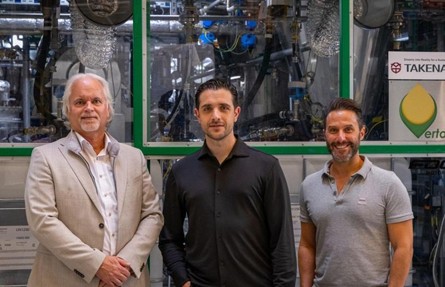
We are excited to be investing in Vertoro through Climate Tech Partners' fund and Aviation Sidecar, backed by partners Qantas and Airbus, who bring expertise across SAF production and certification, as well as the global fuels market, in a round led by Maersk and InvestNL. We view Vertoro as one of the most credible routes to abundant, low-cost sustainable chemicals and fuels, as they eventually move to serve Australia, one of the world's largest aviation fuel market.
(1) Stora Enso is a global leader in the paper and packaging industry listed on Nasdaq Nordic exchanges.
Latest articles
.png)
Australia sends millions of tonnes of waste to landfill every year, including around 7.5 million tonnes of municipal waste and even more commercial and construction waste.
.png)